Splinter Farm Alert: The Tell-Tale Signs You've Bought a Counterfeit Deck

Photo: CEphoto, Uwe Aranas, CC BY-SA 3.0, via Wikimedia Commons
There's a particular type of heartbreak reserved for skaters. It's not the broken wrist. It's spending three months of Saturday shifts on a deck you thought was legit, only to have it snap on the third ollie because the "7-ply Canadian maple" was actually seven layers of hope and wood glue.
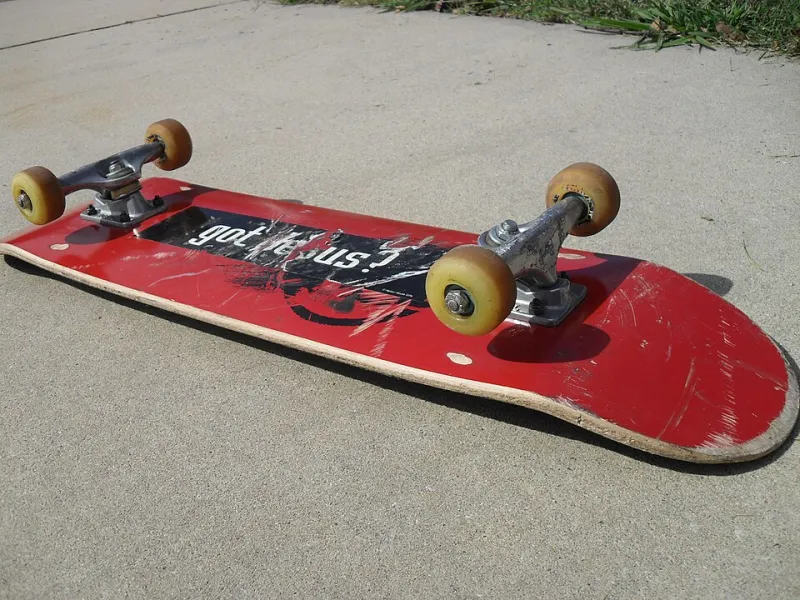
Counterfeit decks are flooding marketplace listings and too-good-to-be-true online shops, and the fakes are getting better-looking. But they're not getting better-made. We grabbed a knockoff, put it next to the genuine article, and made a proper Spot Check of it.
The Weight Test: Pick It Up First
Before you even look at the graphics, pick the thing up. A real deck has a specific heft — dense, springy, alive. Fakes often feel wrong in one of two ways: weirdly light (because the plies are thin or there's sneaky filler in there) or dead-heavy (because someone's used whatever timber was cheapest that week).
Our counterfeit was noticeably heavier than the genuine deck of the same size. Not by grams — by feel. Real Canadian maple is light and snappy. Whatever was in the fake felt like a school drama prop.
The Nose Knows: Shape and Press Quality
Run your fingers along the rails. A properly pressed deck has clean, crisp edges and a consistent concave from truck mount to tail. Fakes frequently show:
- Lumpy, wobbly rails where the pressing was rushed or the mould was cheap
- Asymmetric concave — hold it up at eye level and look down the deck. If one side dips differently to the other, walk away
- A nose and tail that don't match. Genuine decks are symmetrical by design. If the kick angles are noticeably different, that's a factory with no quality control
The Ply Line-Up
This is the big one. Genuine decks advertise their ply count because they're proud of it. Look at the deck's side profile in decent light — you should see clean, even layers running edge to edge.
Our fake claimed seven plies of maple. Under inspection, the layers were uneven, some were barely a millimetre thick, and at least one looked suspiciously like a different species of tree entirely. Cheap decks delaminate because the glue and pressing are substandard — which means the first rain-soaked session starts peeling them like a satsuma.
Graphics: The Printed Lie
Counterfeiters nail the artwork because they're literally copying it. What they can't nail is the print quality:
- Blurred or pixelated logos, especially small text on the deck's underside
- Colours slightly off from the official brand palette — compare against photos on the manufacturer's own site
- Heat transfer bubbling — small bumps or ripples in the graphic where it's been applied badly
Also check the barcode and the manufacturer's stamp on the inside ply. Real decks have them. Fakes have either nothing, or a smudgy printed imitation that wouldn't scan in a supermarket.
The Price That Gives the Game Away
Let's talk numbers. A pro-quality deck from a proper brand sits somewhere in the £45–£70 range at UK retail. If you see that £70 deck listed at £22 with free postage from a seller with 14 reviews, the maths doesn't work. Genuine wood, genuine glue, genuine printing and shipping cost money. Nobody sells the real thing at half price out of charity.
Where to Actually Buy
The fix is boring but effective: buy from established UK skate shops, whether that's your local independent or the reputable online retailers. They buy from official distributors, they'll stand behind the product, and — crucially — they sponsor your local scene, run the jams and fix your bearings for free when you're being a nuisance.
Every pound spent at a proper skate shop is a pound that keeps the scene alive. Every pound spent on a splinter farm is a pound funding someone's warehouse of sad, delaminating lies.
The Verdict
The counterfeit we tested would probably survive a flat-ground push around a car park. It would not survive a single proper session, and it definitely wouldn't survive you. Check the weight, check the plies, check the price, and when in doubt — buy from the shop that knows your name.