Mongo, Snakes and Snakeboards: Decoding What British Skaters Actually Say
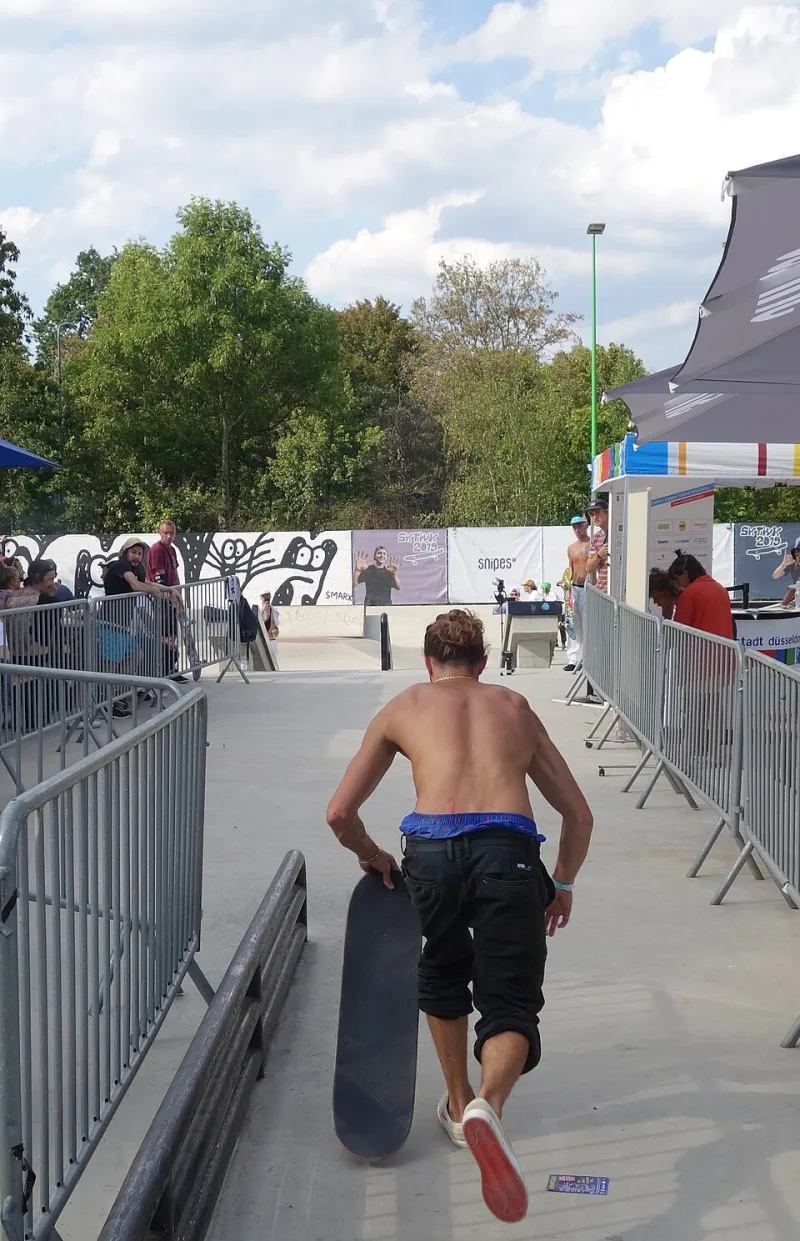
Photo: Kürschner (talk) 16:15, 31 August 2019 (UTC), Public domain, via Wikimedia Commons
There's a moment every new skater dreads. You've rocked up to your local park — maybe it's Finsbury, maybe a windswept prefab in a Swindon car park — someone shouts something across the flat bank, and you stand there nodding like you understood a single word.
You didn't. Nobody does, at first. Skatepark language isn't taught, it's absorbed through osmosis and mild embarrassment. So consider this your cheat sheet, written so you can stop nodding and start talking.
The Big One: Pushing Mongo
Let's rip the plaster off early. Pushing mongo — pushing with your front foot — is the skatepark's original sin. Technically it's just a less efficient way to push. Socially, it's a personality trait people will mention.
The rule: your back foot pushes, your front foot stays over the bolts. If someone films you mongo-pushing and posts it in the group chat, that's not bullying, that's the ecosystem working as intended.
'Snaking' and the Sacred Queue
Skateparks run on an invisible queue. Drop in, take your run, get out of the landing zone. Simple. Snaking is cutting into someone's line mid-run — the cardinal crime of park etiquette.
You'll hear it deployed in escalating levels of Britishness:
- "Mate, I was lining up." (polite warning)
- "You've snaked me twice now." (formal complaint)
- A long exhale and a shake of the head. (nuclear)
Apologise, wave it off, take your turn. The system self-corrects.
'Getting Proper Slidey'
A gloriously British way of saying the ground is damp and your wheels have the grip of a penguin on ice. Related terms:
- "It's greasy out" — light drizzle, wheels slipping on painted surfaces
- "The ledge is dead" — wax and rain have conspired against you
- "One more and then the pub" — the most honest phrase in the language
Rain doesn't stop British skaters; it just changes the vocabulary.
Calling the Trick Before It Exists
New skaters think you announce a trick after landing it. Wrong. You shout intent before: "Gap to fifty!" The beauty is nobody checks. Shout "tre flip" enough times, land a shuvit, and honestly, the moral victory stands.
This also covers the sacred "bullshit!" — the traditional response to any claimed trick, delivered with warmth. It's a greeting, really.
The Equipment Euphemisms
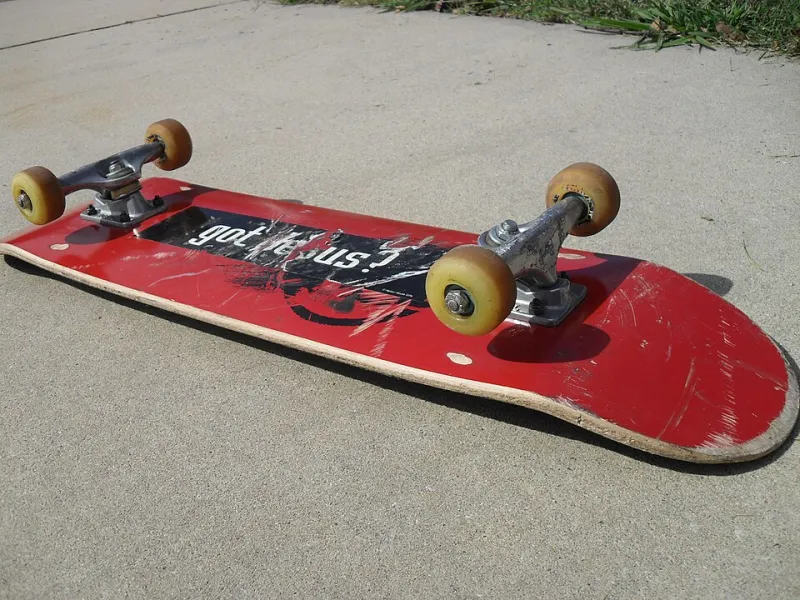
- "Chips" — not the fried kind; the splintered tail of a deck that's seen better days
- "Wheelbite" — when your wheel kisses the deck mid-turn and launches you earthward. Always the wheel's fault. Never yours.
- "It's got pop" — the highest compliment a deck can receive
- "Freshies" — new wheels day. Expect excessive cruising and unnecessary ollies over nothing.
Regional Flavours
Skate slang has accents. London parks lean American-import heavy — everything's a "sesh" and every obstacle gets a nickname with history attached. Up in Glasgow and Edinburgh, there's a drier, blunter register: fewer adjectives, more "that's pure sketchy, eh."
In Bristol, expect everything to be described as "proper" — proper steep, proper slidey, proper good sesh. It's not lazy, it's efficient.
Words That Mean the Opposite of What They Say
- "Sketchy" — landed it, but ugly. Still counts.
- "Clean" — the opposite of sketchy. Delivered flatly, never excitedly.
- "Cheap " — said after a trick that was actually hard. British humility in four syllables.
- "Send it" — attempt the thing you're not ready for. The founding philosophy of the sport.
Your Homework
None of this is a test. Half the fun of skating is turning up, getting the lingo slightly wrong, and being corrected by a twelve-year-old who's been skating six months longer than you. That's the culture working.
So: push regular (not mongo), don't snake, complain about the rain, shout your tricks, and call everything sketchy. Congratulations — you're fluent.